

Written by Tamra Bedford, RN, a cosmetic nurse with more than 20 years in aesthetics.
"Is it permanent?" is the first thing almost everyone asks me about laser hair removal. The answer is yes, with an asterisk, and the asterisk matters before you spend money on a package.
Laser gives you permanent hair reduction. That's the FDA's term, and it was picked carefully. Most of the hair in a treated area stops growing back for good. Some of it doesn't. Below is what that means for your legs, underarms, bikini line or face, who gets the best results, and how a course of treatment actually goes.
Is laser hair removal permanent?
When the FDA clears a laser for hair removal, the wording is "permanent hair reduction," never "permanent hair removal." The clearance documents define it as a long-term, stable reduction in the number of hairs regrowing when measured at 6, 9 and 12 months after the treatment series ends. Fewer hairs, and they stay fewer.
A follicle the laser has disabled is done. What grows back tends to be finer, lighter and sparser. The American Academy of Dermatology says most patients stay hair free for months or even years, and that regrowth is usually less noticeable. Stray hairs often hang on, though. Your body can also start new hairs over the years, and hormonal changes such as pregnancy, menopause or PCOS can speed that up. That's why some people come back for a touch-up session now and then.
Anyone who promises you 100% hair free forever after a few visits is selling you something.
The laser only catches hair in its growth phase
Melanin, the pigment in a dark hair, absorbs the laser's light. The hair carries that heat down to the follicle, and a follicle heated past a certain point can't make a new hair. Doctors call it selective photothermolysis. In plain English, the laser picks the hair over the skin around it.
There's a catch. The laser only reaches hairs in their active growth phase, called anagen, and at any moment plenty of the follicles in an area are resting. One session can't get them all. The AAD puts the drop after a first treatment at 10% to 25%, and results build from there as resting follicles wake up and get treated.
In my practice, most areas take five to seven sessions, spaced four to six weeks apart. A few people are done in three. Coarse, dense hair can take ten to twelve. I break down that math in how many laser hair removal sessions you'll need.
Dark hair responds best, and your skin tone decides the laser
Since the laser aims at pigment, hair color matters more than anything else. Dark brown and black hair respond best. Blonde, red, gray and white hair don't carry enough melanin for the laser to grab, so laser isn't a good fit for them. I'd rather tell you that at a consultation than sell you sessions that won't work.
Skin tone is a separate question. Skin has melanin too, and on darker or tanned skin the wrong laser heats the surface instead of the follicle. That's where burns and dark or light patches come from. I use a Cutera CoolGlide, a long-wavelength laser made to treat every skin tone from very fair to very dark, tanned skin included. Its tip is chilled. Your skin stays cool. If you have brown, olive or deep skin, read my post on laser hair removal for darker skin tones before you book anywhere.
Laser and electrolysis are the two lasting options
People searching for permanent hair removal usually end up comparing four methods. Only two of them change what the follicle does.
| Method | How long it lasts | What it does to the follicle | Worth knowing |
|---|---|---|---|
| Shaving | A day or two | Nothing. It cuts the hair at the surface. | Doesn't change how hair grows back |
| Waxing and plucking | A few weeks | Pulls the hair out, and the follicle regrows it | Off limits between laser sessions |
| Laser hair reduction | Long term, after a series | Heats pigmented follicles until they stop | Needs dark hair, and covers big areas fast |
| Electrolysis | Permanent, one follicle at a time | A fine probe destroys each follicle | Doesn't rely on pigment, but slow for large areas |
On dark hair across the legs, underarms, back or a bikini line, laser wins easily. Electrolysis treats follicles one by one, so it suits a small area or light hair that a laser can't see. The FDA's consumer guidance calls electrolysis permanent because it destroys the follicle. It takes a series of appointments too.
Shaving between sessions won't make hair grow back thicker
Next to "is it permanent?", the question I hear most is whether shaving makes hair come back thicker. It doesn't. Shaving cuts the hair at the skin and leaves the follicle alone. Mayo Clinic puts it plainly: shaving doesn't change hair's thickness, color or rate of growth. Stubble just feels coarser because the razor leaves a blunt tip.
Shaving is exactly what I want you doing between laser sessions. Waxing, plucking and tweezing are out, because they pull the hair out of the follicle and leave the laser nothing to aim at.
What a laser hair removal session is like, start to finish
Before your appointment
- Shave the area the day before or that morning, and come with clean skin, no lotion or oil on it.
- Stay out of the sun, tanning beds and self-tanner for two weeks beforehand.
- Leave jewelry near the treatment area at home. Loose clothes make the day easier.
- Tell me about your medications, especially anything that makes skin more sensitive to light, like retinoids or isotretinoin. Mention cold sores, keloid scars or a recent tan, too.
During the treatment
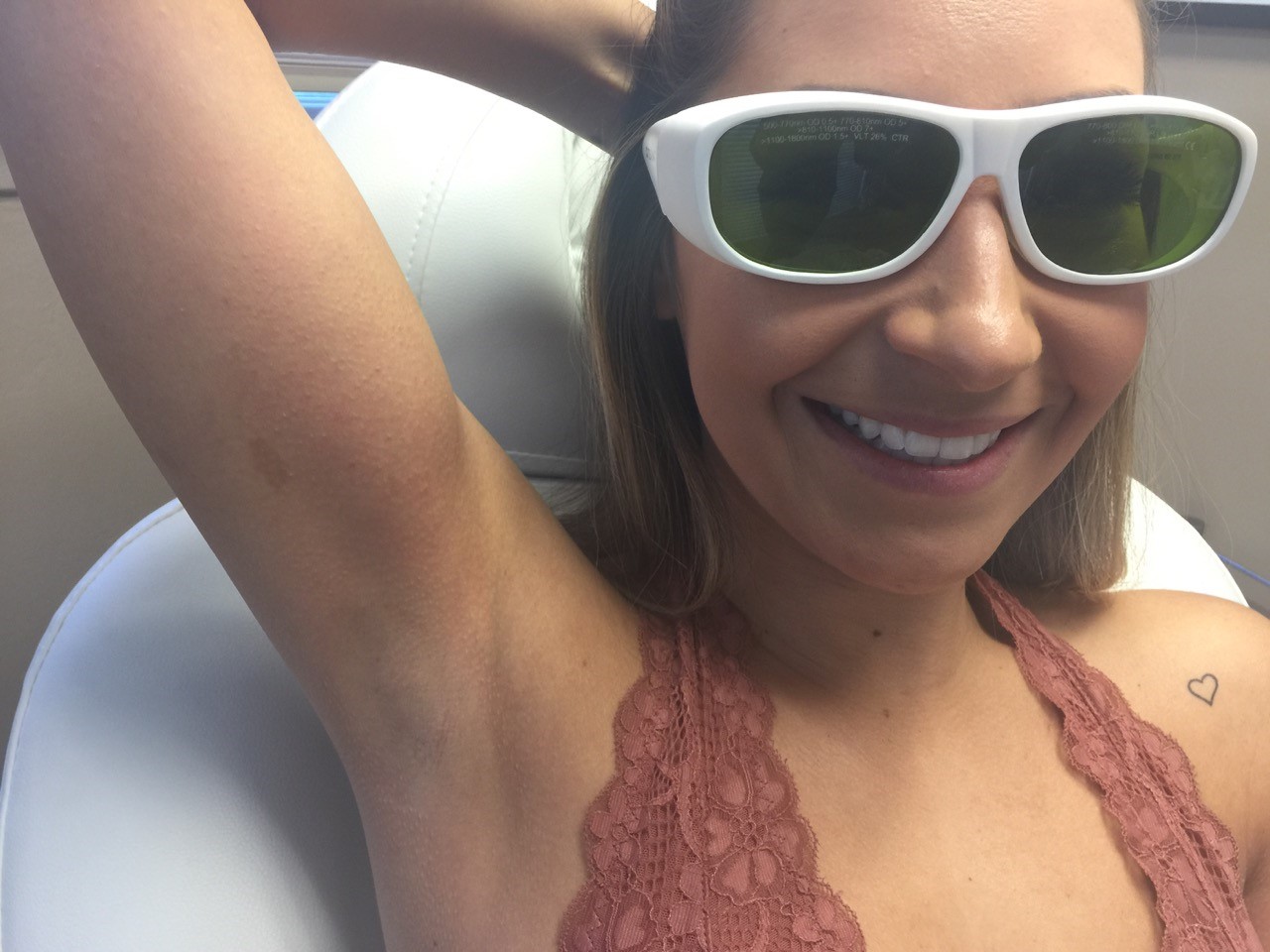
We both wear eye protection. I set the laser for your skin tone, your hair and the area we're treating, then move the handpiece across your skin in pulses. Thanks to that chilled tip, most of my clients feel very little. An upper lip takes under five minutes. Underarms are often done in under ten. Most sessions run 10 to 45 minutes depending on the size of the area, and you can go straight back to your day afterward.
After the treatment
- Some redness is normal and usually fades within a few hours.
- Keep the area out of direct sun for at least a week and wear SPF 30 or higher.
- Skip hot baths, saunas and hard workouts for 24 to 48 hours.
- Treated hairs shed over the next one to three weeks. Good sign. That shedding means it's working, and it isn't regrowth.
- Aloe vera or a gentle moisturizer helps if the skin feels warm.
If you see blistering, or swelling that won't settle, call me. That's part of what you're paying for.
The pros and cons, without the sales pitch
The upside is easy to feel. No daily razor, no waxing appointments, no razor bumps, and far fewer ingrown hairs once the hair is gone.
Now the downsides, which you should hear before you start. It takes months, not weeks. It won't work on light hair. It isn't 100%, and touch-ups happen. You'll need to manage sun exposure around your sessions. The AAD lists discomfort, swelling and redness as the common side effects, usually gone within a few days, and blistering, cold sore flare-ups, infection, scarring and changes in skin color as the rare ones. Some of those color changes can be permanent, which is the main reason the laser and the settings matter so much.
I do hear regret stories. They're almost never about the laser itself. They're about where people went: a different technician every visit, a laser turned down so low nothing happened, a contract that outlasted their patience. (I wrote about what the big laser chains don't tell you up front.)
Facial hair responds well, with one hormone caveat
Upper lip, chin, jawline and sideburns are some of the areas I treat most. Dark facial hair responds well to laser. If your facial hair is driven by hormones, as it often is with PCOS, new hairs can keep appearing after your series, so plan on occasional touch-ups and talk with your doctor about the hormone side.
One rare effect to know about: in a small number of people, laser on the face can make nearby fine hair grow in darker. It's called paradoxical hair growth. It's uncommon, and I watch for it from one visit to the next.
Questions I get at almost every consultation
How long does laser hair removal last?
Hair that's been treated through a full series is reduced for the long term. Most people stay smooth for months or years at a stretch, and some come back once or twice a year for a quick touch-up on the stragglers.
Is laser hair removal safe?
With a laser that suits your skin, settings matched to you, and someone who knows how your skin reacted last time, side effects are usually mild and short. I've done this for over 20 years. Every new client also sees a physician before the first treatment.
Who shouldn't get laser hair removal?
Blonde, red, gray or white hair is the big one, because the laser can't find it. Wait out a fresh tan or sunburn. An active skin infection or cold sore in the area means we reschedule. If you take something that makes you sensitive to light, we'll talk about timing first.
Can laser remove hair from the legs permanently?
Legs are one of the best areas for it, especially with dark hair. Expect a series of sessions and a big, lasting drop in regrowth, with maybe a touch-up later.
Where I treat you, and how to book
Two offices, one nurse. Your first visit is a consultation at Blackhawk Plastic Surgery & MedSpa, 3600 Blackhawk Plaza Circle in Danville, where a physician sees you before treatment starts. After that, your sessions are at my studio at 160 Sunset Drive, Suite 110, in San Ramon. I do every treatment myself, from the first session to the last, and I offer a discount when you book a package of three.
Send me a note to book your consultation, or call 925-518-5212.